
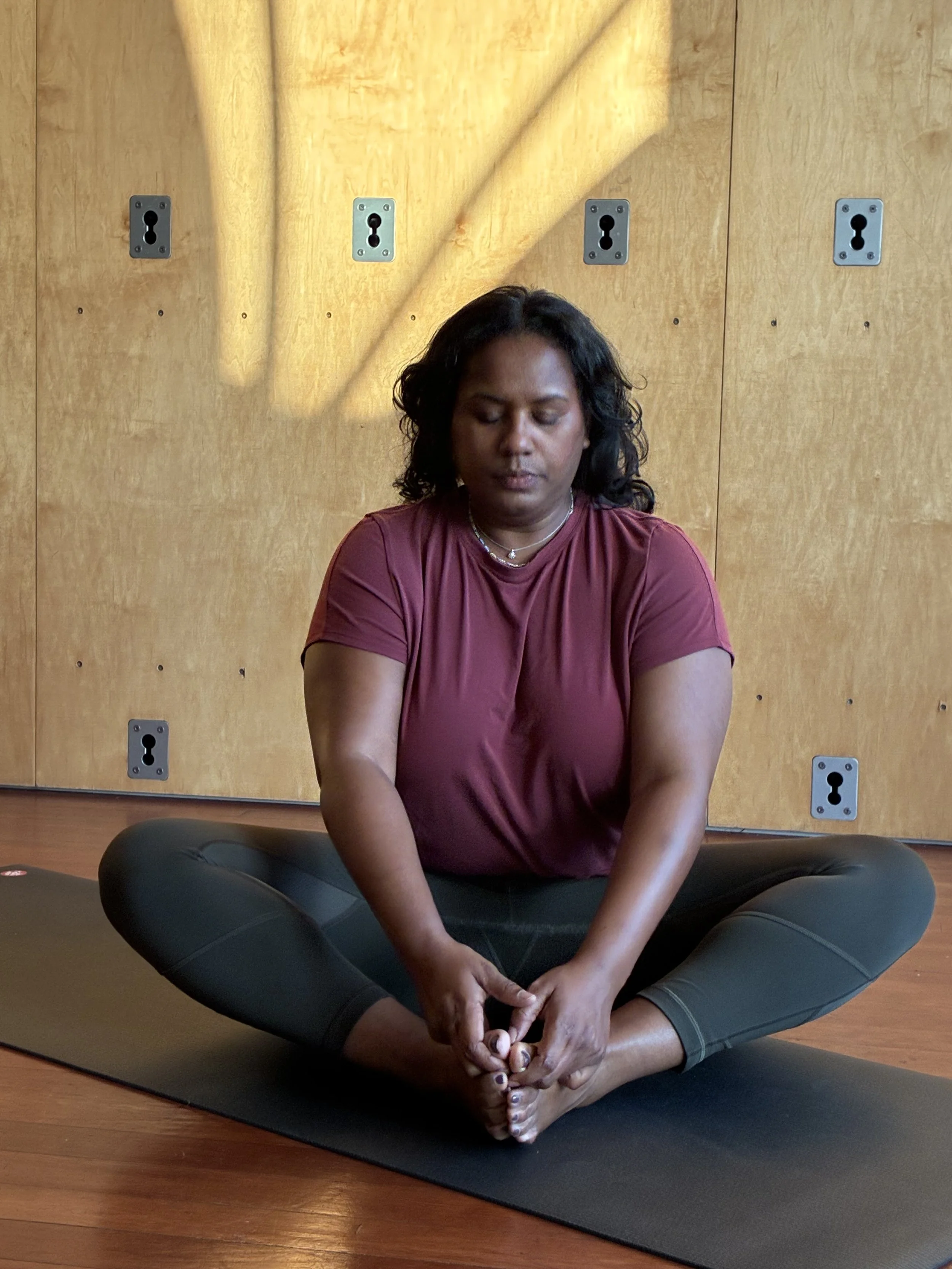
Slowing Down Is My Yoga Practice Right Now
The irony is that yoga teaches us to become more comfortable with stillness, yet I had unknowingly become afraid of it.
In the Yoga Sutras, Patanjali defines yoga with one of the most famous verses:
"Yoga is the calming of the fluctuations of the mind."
There is something a little ironic about a yoga studio owner writing a blog post about stress.
Trust me, I see it too.
People often assume that because I own a yoga studio and have practiced yoga for over twenty years, I must spend my days floating around in a state of perfect peace. The reality is a little less glamorous.
I have a full time job. I own Yoga on Beacon. I teach classes. I manage a team of incredible instructors. I'm trying to be a good wife, a good friend, a present daughter and granddaughter. I want to make time for hobbies, travel, reading, movement, and the people I love.
Somewhere along the way, I convinced myself I could do all of it.
Back in May, my body let me know otherwise.
My left eye started twitching nonstop. I wasn't sleeping well. My nervous system felt completely fried. I was exhausted but somehow couldn't relax. Stress had quietly taken over every corner of my life.
One thing I noticed that surprised me was how addicted I had become to input.
Silence felt uncomfortable.
If I was driving, I needed a podcast.
If I was cleaning, I needed music.
If I was cooking, I needed YouTube.
If I sat down for five minutes, I instinctively reached for my phone.
It felt like I constantly needed something talking to me, entertaining me, teaching me, or demanding my attention.
The irony is that yoga teaches us to become more comfortable with stillness, yet I had unknowingly become afraid of it.
In the Yoga Sutras, Patanjali defines yoga with one of the most famous verses:
"Yoga is the calming of the fluctuations of the mind."
Not eliminating our thoughts.
Not becoming someone who never experiences stress.
Simply learning to quiet the constant mental noise.
I realized my mind hadn't had a quiet moment in months.
Owning a yoga studio doesn't exempt you from business problems. Payroll still has to happen. Teachers need support. Classes need marketing. Toilets break. Software glitches. Rent is due. Social media always wants another post. There is always another email waiting.
The work is meaningful.
It is also still work.
This summer I've made a commitment with my therapist to intentionally slow down.
Not because I'm burned out beyond repair.
Because I don't want to get there.
One of the biggest changes my husband and I made sounds incredibly small.
We stopped watching TV.
Mostly.
We'll absolutely still watch the NBA Finals, the World Cup, the WNBA Commissioner's Cup, and the US Open. We're not giving up sports.
But the nightly Netflix routine has been replaced with things that leave us feeling more connected instead of more distracted.
We're reading.
Working on puzzles.
Playing music.
Kayaking.
Playing tennis.
Taking walks.
Sitting outside on our rooftop deck with coffee.
Watching the Seattle sunshine instead of another episode autoplaying.
I've started journaling again in the mornings before opening my laptop.
I'm walking more.
Sleeping better.
My concentration at work has improved.
I feel less scattered.
It's amazing how much mental space comes back when you stop filling every empty moment.
The harder practice for me has been stepping away from the studio.
As an owner, it's easy to believe everything depends on you.
That if you don't answer every message immediately, post every day, or teach every class, somehow everything will fall apart.
Last week I intentionally didn't post much on social media.
I stepped away from TikTok.
I canceled my own classes.
I let myself rest.
More importantly, I trusted the systems we've built and the instructors I've hired.
And guess what?
Yoga on Beacon kept going.
Students still practiced.
Teachers still showed up.
Community still happened.
That was probably the biggest lesson of all.
The Bhagavad Gita reminds us that we are entitled to our actions but not attached to the results. We are asked to do our work with care and integrity, then loosen our grip on control.
That has become my practice.
Not doing less because I'm lazy.
Doing less because I want to be fully present for the things that actually matter.
Sometimes we think yoga is mastering Crow Pose or finally touching our toes.
Sometimes yoga is putting your phone down.
Closing your laptop.
Taking a walk without headphones.
Reading a book instead of opening another app.
Trusting your team.
Canceling a class when your body needs rest.
Sitting on your porch with a cup of coffee while the city slowly wakes up.
For me, this season has been a reminder that yoga isn't just what happens on the mat for sixty minutes.
It's how we choose to live the other twenty three hours of the day.
I'm still figuring it out.
I'm still catching myself reaching for my phone.
I'm still learning how to leave work at work.
I'm still reminding myself that rest is productive too.
But I think that's the beauty of yoga.
It's called a practice for a reason.
We're never really finished.
We're simply invited, over and over again, to come back to our breath, to ourselves, and to what matters most.
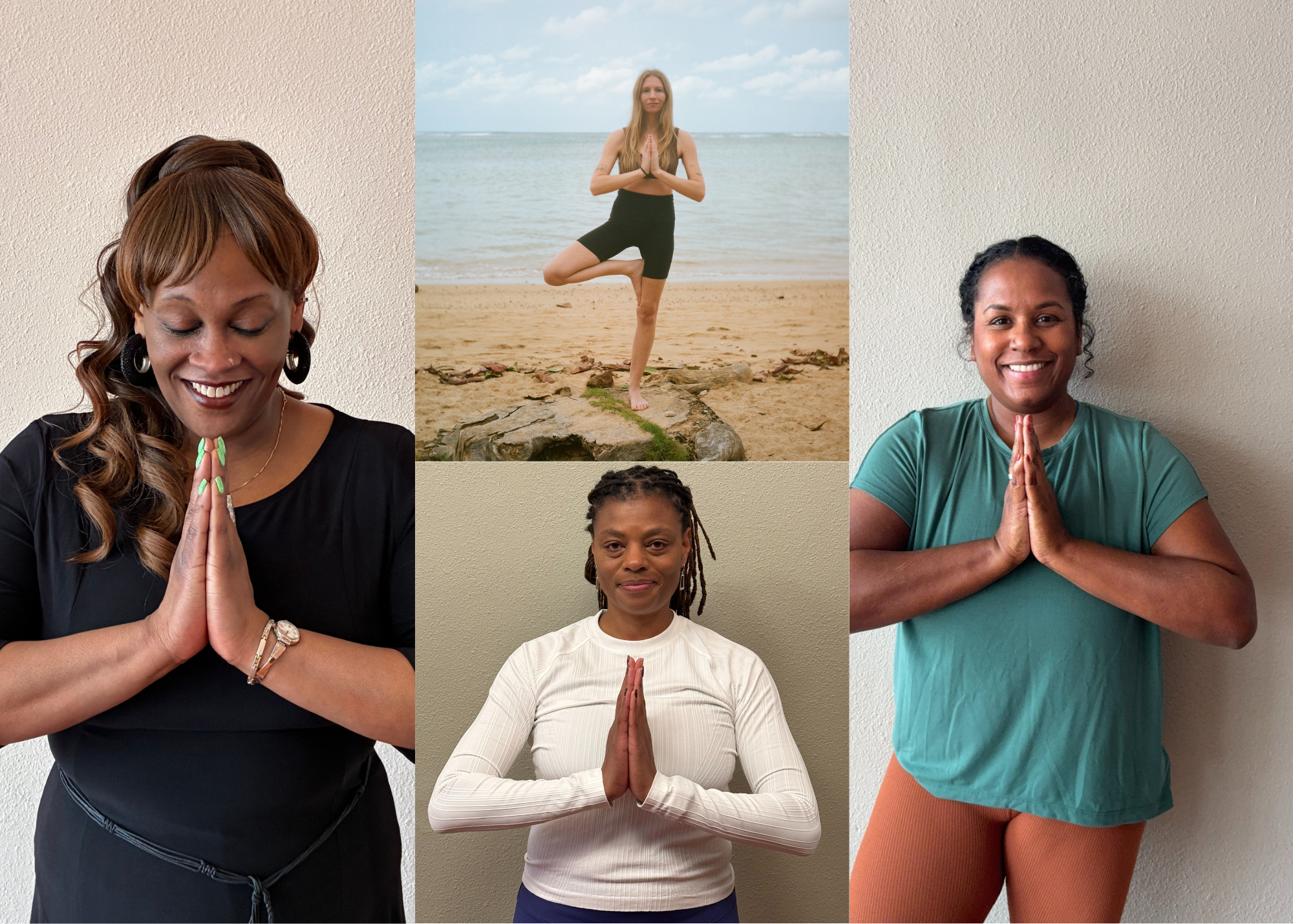
Should Yoga Classes Still End with "Namaste"? Here's Why We Stopped Saying It
A candid conversation from the owner of Yoga on Beacon — on language, respect, and finding words that actually feel true.
If you have taken a yoga class in the United States in the last twenty years, you have almost certainly heard it: the palms pressed together, a gentle bow, and the word "Namaste" offered at the end of class. For many students, it is as familiar as the last exhale of savasana.
At Yoga on Beacon, we do not say it anymore. And I want to tell you why — not from a place of judgment toward studios that do, but from an honest place about who we are, what we have learned, and what feels true for our community here in Beacon Hill, Seattle.
It started with a WhatsApp thread
A few months ago, the conversation started the way so many real ones do these days — in a WhatsApp group with our teaching team. We were talking about language in the studio: the words we use to open and close class, the cues we give, the rituals we hold. When the topic of "Namaste" came up, something shifted. Message after message, our teachers shared that the word did not feel right coming out of their mouths — not because it is not beautiful, but because of how it was landing.
As a Black Indian woman and studio owner, this conversation hit close to home for me. Sanskrit is part of the living cultural inheritance of my ancestors — not a brand, not an aesthetic, and not a warm way to close out a fitness class. The more I sat with it, the more I realized: the way "Namaste" is commonly used in Western yoga settings is often disconnected from its actual meaning, its context, and the people it comes from.
"The word belongs to a living tradition. Using it as a sign-off flattens something that deserves so much more."
What does "Namaste" actually mean?
"Namaste" (नमस्ते) is a Sanskrit salutation rooted in reverence. Yoga teacher, author and South Asian diversity advocate Susanna Barkataki notes that Sanskrit scholars translate it as namas meaning reverence or salutation, and te meaning "to you" — so at its core, it is a bowing, an honoring directed entirely outward.1 Barkataki also points out something striking: there is no "I" in the word at all, which she finds beautiful precisely because the ego is completely absent from the greeting.1
In practice, Barkataki writes from her own experience growing up in an Indian family that "Namaste" or "Namaskar" is used as a greeting when meeting an elder — not as a farewell at the end of a gathering.1 So even on a basic contextual level, using it to close a yoga class does not map onto how the word actually lives in the culture it comes from.
A quick note on pronunciation
In Indian families and traditions, the word is pronounced closer to "na-muh-steh" with the emphasis on the second syllable.
The version commonly heard in Western yoga studios — a drawn out "nam-ah-staaay" — reflects how the word has been reshaped through American yoga culture rather than its actual spoken form.1
The broader pattern: yoga and cultural extraction
This is not just about one word. It is part of a larger pattern that scholars and practitioners have been naming for years. When yoga was popularised in the United States across the 20th century, much of what made it a rich spiritual and philosophical tradition — its roots in Hindu, Buddhist and Jain thought, its living teachers and lineages, its relationship to caste and to colonial history — was quietly set aside. What remained were the postures, some Sanskrit names, and a handful of borrowed words and symbols that gave classes an exotic spiritual quality without the depth behind them.
Barkataki, author of Embrace Yoga's Roots, frames this clearly: the alternative to cultural appropriation is creativity and accountability, not the outright abandonment of everything borrowed, but a genuine willingness to ask why we use what we use and whether we are honoring it honestly.1 She poses questions that stayed with me long after our WhatsApp thread settled down: Are you pronouncing it correctly? Are you attached to it, and if so, why? Is there another way to carry the same intention in your own voice?1
"Yoga is a gift that has crossed oceans. The least we can do is carry it with care."
What we say instead
Our teachers landed in different places, and that feels right. There is no single replacement we have all agreed on because that was never really the point. What we share is the intention: genuine gratitude, offered honestly, in a voice that is actually our own. Barkataki compiled over sixty alternatives that yoga teachers around the world use to close class with integrity — a resource we found genuinely useful and worth sharing.1
"Thank you." Simple, genuine. No performance required.
"I see you." A real acknowledgment of presence and effort.
Silence and a bow Let the practice speak. No words needed.
"Grateful for this." Honest and grounded in your actual experience.
This is not about being the language police
I want to be clear: this is not a call to shame teachers who say "Namaste," or students who have found meaning in the ritual of it. Barkataki herself is careful to frame this as an invitation rather than a verdict — a practice of Vichāra, the yogic discipline of critical inquiry, rather than a rulebook.1 The yoga community is big enough to hold this conversation without it becoming a competition over who is doing it right.
What I do believe is that the yoga community in Seattle and beyond is in a genuine moment of reckoning. Who teaches? Who owns studios? Whose spiritual traditions are being drawn on, and how are the people those traditions belong to being honoured? These questions matter. And they are happening in studios like ours, in WhatsApp threads among teachers, one honest word at a time.
Come practice with us
At Yoga on Beacon, we are building a studio that is thoughtful, inclusive and honest — about who we are, where yoga comes from, and what it means to practice with integrity in the heart of Beacon Hill. We welcome every body, every background and every question. Especially the hard ones.
If this conversation resonates with you, or if you have thoughts to share, we would love to hear from you. Come to class, drop us a message, or just sit with it. That is what yoga is for.
References
Barkataki, S. (2019, updated 2022). Namaste: 60+ Options for Confidently Ending Your Yoga Class. susannabarkataki.com. https://www.susannabarkataki.com/post/namaste
Barkataki, S. (2020). Embrace Yoga's Roots: Courageous Ways to Deepen Your Yoga Practice. Catalyst Press.
Mentorship Matters: Why Yoga on Beacon Is Investing in the Next Generation of Teachers
At Yoga on Beacon, we believe a strong yoga community doesn’t just happen — it’s cultivated. It’s nurtured through thoughtful leadership, intentional training, and spaces where people feel supported to grow.
One of the biggest gaps we see in the yoga world today is what happens after teacher training.
Many Yoga Teacher Training (YTT) programs do a beautiful job introducing anatomy, philosophy, and sequencing fundamentals. But the truth most new teachers quietly discover? Graduation day is often just the beginning.
The Reality New Teachers Face
We hear it all the time:
“I finished my 200-hour, but I don’t feel ready to teach a full room.”
“I know the poses, but cueing in real time feels overwhelming.”
“Teaching experienced students is intimidating.”
“I don’t know how to find my voice yet.”
And honestly? These feelings make complete sense.
Most YTT programs are intensive but short. They give you the foundation — but they don’t always give you enough reps in real rooms with real students. They don’t always teach:
How to read the energy of a mixed-level class
How to pivot when your sequence isn’t landing
How to confidently cue while mirroring
How to hold space for experienced practitioners
How to recover gracefully when things go sideways
Teaching yoga is a living, breathing skill. It takes practice. It takes feedback. It takes support.
Why Mentorship Is the Missing Bridge
At Yoga on Beacon, we see mentorship as the bridge between certification and confident teaching.
Because the truth is: new teachers don’t need to be thrown into the deep end — they need a place to land.
Our mentorship model is built around real-world experience in a supportive environment. We’re not interested in perfection. We’re interested in growth.
Inside our mentorship pathway, newer instructors have the opportunity to:
Co-teach alongside experienced teachers
Practice cueing in live classes
Build confidence in real time
Receive thoughtful, actionable feedback
Gradually take on more teaching responsibility
Find their authentic teaching voice
This approach allows teachers to build both skill and nervous system safety — which we believe is essential for long-term success and sustainability in this field.
Why This Matters for Students, Too
Mentorship isn’t just good for teachers — it’s good for the entire community.
When instructors feel supported:
Classes feel more grounded
Cueing becomes clearer
Energy in the room feels more intentional
Students are held more skillfully
Our community benefits from teachers who are well-prepared, well-supported, and continuously growing.
And for our experienced yogis — you may notice something special when you attend a mentorship class. There’s often a beautiful blend of fresh perspective and steady guidance in the room.
A Studio That Invests in People
Yoga on Beacon has always been about more than just the workout. We are building what we hope feels like a true third space for Beacon Hill — a place where people come to practice, to connect, and to grow.
Part of honoring that mission means investing in the next generation of teachers, especially those from communities that haven’t always had clear pathways into teaching.
We are committed to creating:
Accessible on-ramps into teaching
Paid co-teaching opportunities
Structured support and feedback
A welcoming environment to learn and refine
Because when teachers thrive, the whole community rises.
A Note to New Teachers
If you’re a newly certified instructor who feels a little wobbly — you are not behind.
You are right on time.
Confidence in teaching yoga isn’t built in a weekend training. It’s built class by class, breath by breath, rep by rep.
And you don’t have to figure it out alone.
Yoga on Beacon is proud to be a safe place to land, practice, and grow.
If you’re interested in learning more about our mentorship opportunities — or supporting a mentorship class by attending — we’d love to welcome you into the room. 🧡
We Are One People, on One Earth
Yoga on Beacon has always been more than a place to move your body. It is a space rooted in community, care, and belonging.
From the creaky hardwood floors to the sunlight pouring through the windows, this studio exists to remind us that we are connected — to ourselves and to one another.
What We Stand For
At Yoga on Beacon, we believe in dignity, respect, and humanity for all people.
We do not support actions or systems that dehumanize others or reduce people to labels. We believe people are not “immigrants” first — they are human beings, neighbors, and contributors to our shared society.
This studio is a place where everyone deserves to feel safe, seen, and welcome.
Why This Is Personal
I am an immigrant to this country.
I was raised with the Jamaican motto “Out of Many, One People.” It’s a reminder that our differences are not something to fear — they are what make us whole. That belief has shaped how I move through the world and how I lead this studio.
Immigration is not abstract to me. It is lived. It is human. And it informs my commitment to ensuring Yoga on Beacon is a space where no one is made to feel small, unsafe, or unwelcome.
Yoga as a Practice of Humanity
Yoga teaches us that separation is an illusion.
We breathe the same air. We share the same ground. We experience joy, fear, grief, and love through our bodies in remarkably similar ways. Practicing yoga means practicing compassion — not just on the mat, but in the world.
Non-harm doesn’t stop when class ends.
Turning Values Into Action
Values matter most when they’re lived.
Moving forward, Yoga on Beacon will offer:
A monthly donation-based class, with all proceeds supporting immigrant advocacy work
We are proud to support the Northwest Immigrant Rights Project, an organization providing legal advocacy and protection for immigrant communities in Washington.
A Studio Rooted in Belonging
Yoga on Beacon is a neighborhood studio. That means we show up for our neighbors.
No one should be bullied, threatened, or made to feel anything other than fully human when they walk through our doors. We believe deeply in community care, human rights, and loving our neighbors — on and off the mat.
Out of many, one people.
One earth. One community.
Thank you for being here and for helping make Yoga on Beacon a place where breath meets belonging.
With care,
Danielle
Owner, Yoga on Beacon
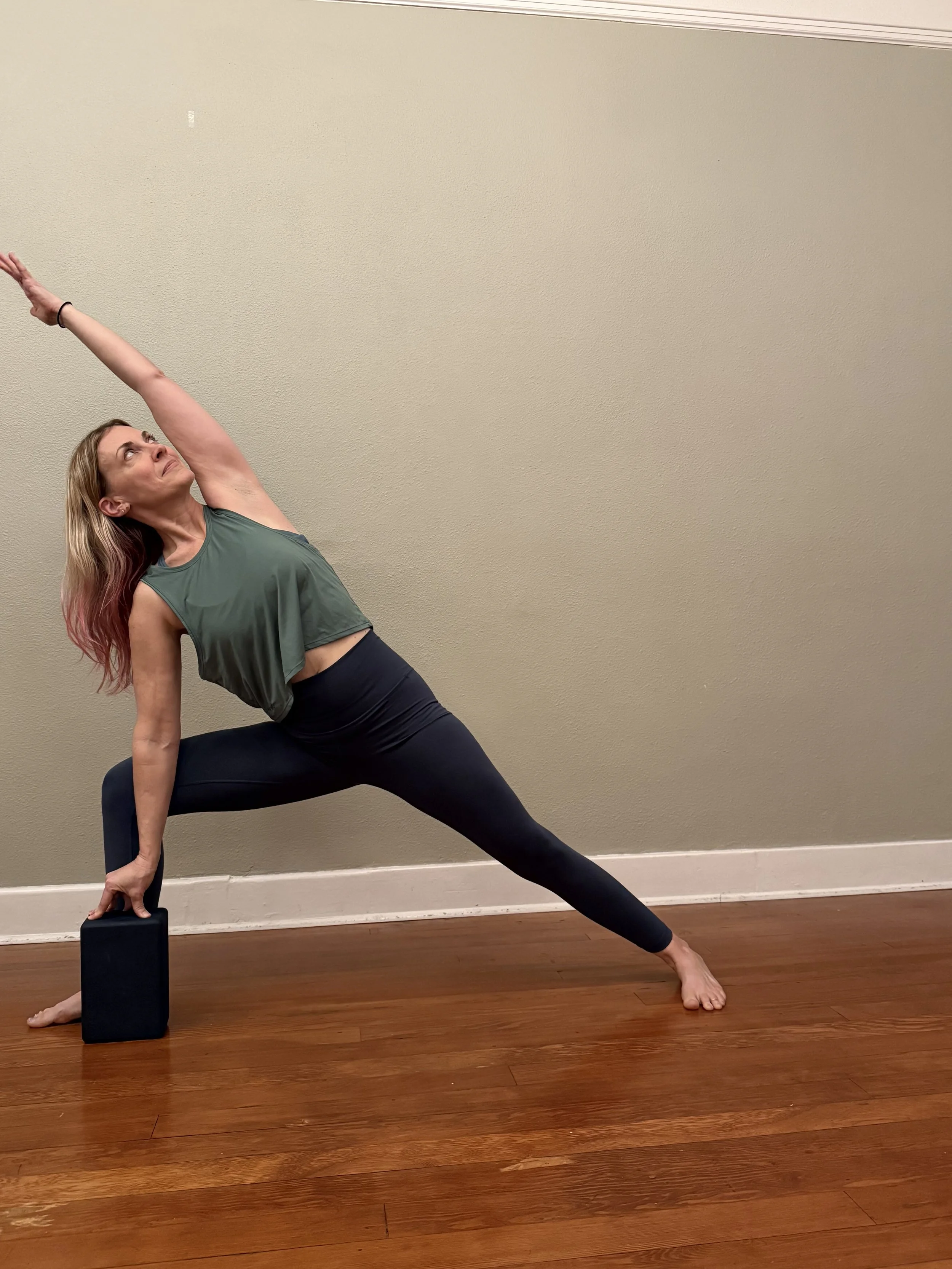
A Fresh Start for 2026: New Schedule, New Teachers, Same Yoga on Beacon Heart
We’re welcoming 2026 with new classes, new teachers, and a refreshed schedule at Yoga on Beacon. From Slow Flow to Yoga Sculpt and Essentials, our updated offerings are designed to support different bodies, energy levels, and real-life schedules.
Yoga on Beacon is stepping into 2026 with intention, excitement, and a few thoughtful updates we can’t wait to share with you.
As we move into the new year, our goal is simple: make it easier for you to show up, find your rhythm, and feel supported in your practice—whether you’re a long-time member or brand new to the studio.
We’re excited to introduce several new classes to the Yoga on Beacon schedule in 2026—each designed to support different bodies, energy levels, and schedules.
🧘🏽♀️ Monday | 4:45 PM
Slow Flow with Nicole Farmer
A grounding, breath-led class focused on mindful transitions, strength, and mobility. Perfect for unwinding after the workday.
🔥 Tuesday | 4:45 PM (45 minutes)
Yoga Sculpt with Sharon Chism
A high-energy, music-driven class blending yoga, strength training, and cardio for a fun, efficient workout.
💪 Thursday | 4:45 PM (45 minutes)
Yoga Sculpt with Katie McNamara
Build strength, increase stamina, and break a sweat in this dynamic, fast-paced sculpt class.
🌿 Saturday | 10:15 AM (75 minutes)
Essentials with Shelly G.
A longer-format foundational class focused on alignment, breath, and mindful movement—ideal for beginners or anyone wanting to revisit the basics.
Each class is thoughtfully designed to complement the rest of the schedule, offering options whether you’re looking to slow down, build strength, or deepen your understanding of yoga.
✨ Check out the full 2026 schedule and join us on the mat.
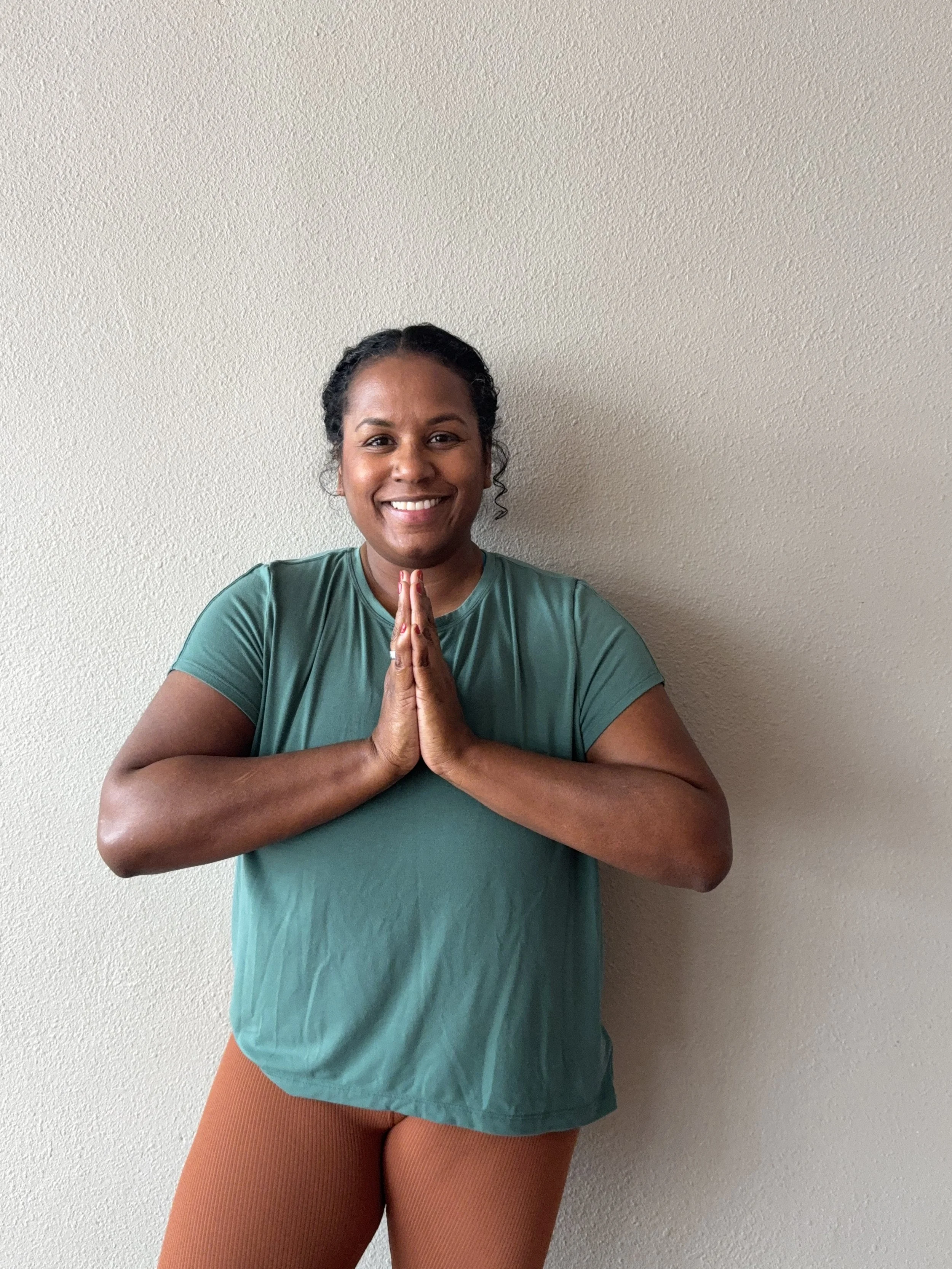
A New Chapter at Yoga on Beacon
It All Begins Here
Dear Yoga on Beacon Community,
I wanted to take a moment to formally introduce myself and share a little about an upcoming transition at Yoga on Beacon.
My name is Danielle, and as of January 1, I’ll be stepping into ownership of the studio. While this is a meaningful change behind the scenes, I want to begin by saying this clearly: Yoga on Beacon remains the warm, welcoming, community-centered space you know and love.
I’ve had the privilege of being part of this studio community already—as a teacher, studio manager, and fellow practitioner—and I’m deeply grateful to Sarah and Elizabeth for creating such a special space and for trusting me to carry it forward. Their care, intention, and commitment to this community are woven into the foundation of Yoga on Beacon, and my goal is to honor that while thoughtfully supporting its next chapter.
What you can expect moving forward:
The same familiar faces, classes, and heart of the studio
A continued focus on accessibility, inclusivity, and community connection
Gradual, intentional updates—not drastic changes—made with care and input
My role is to support the studio, our teachers, and you—our community—so Yoga on Beacon can continue to be a place where people feel grounded, welcomed, and at home.
Thank you for being here, for showing up on your mat, and for helping make this space what it is. I’m truly honored to be part of this next chapter with you.
With gratitude,
Danielle